Cheap High-Protein Prep for Students
There is a specific kind of exhaustion that hits late in the afternoon when your stomach is rumbling, your energy is dipping, and your bank account is looking a little thin. When you are balancing classes, study sessions, and a tight budget, finding the energy to cook healthy meals can feel like a mountain to climb. It is so easy to fall into the trap of cheap convenience foods that leave you feeling sluggish and hungry again an hour later.
But keeping your body fueled and your mind sharp does not have to cost a fortune or take up all your free time. By focusing on a few affordable, high-protein staples and setting aside just an hour or two a week, you can set yourself up for stress-free, nourishing meals that keep you full and focused. Let's look at some simple, realistic ways to master cheap high-protein meal prep without the overwhelm.
The Smart Way to Source Cheap Protein
When you are shopping on a budget, the meat aisle can quickly drain your wallet. The secret to affordable high-protein meal prep is looking beyond expensive cuts of meat and embracing versatile, budget-friendly alternatives.
- Eggs: Truly the gold standard of cheap protein. They are incredibly versatile, cook quickly, and are perfect for batch cooking.
- Tofu: Often overlooked, but tofu is highly affordable, absorbs whatever flavors you throw at it, and has a fantastic shelf life in the fridge.
- Canned Tuna: A pantry lifesaver. It requires zero cooking, is packed with protein, and can be transformed into delicious meals in minutes.
- Legumes and Grains: Lentils, chickpeas, and black beans are dirt cheap, especially when bought in bulk, and add both protein and fiber for long-lasting satiety.
By combining these simple ingredients with bulk-bought grains like brown rice or oats, you can create a solid foundation for your weekly prep without breaking the bank.
Simple High-Protein Prep Recipes for the Week
You do not need to be an expert chef to pull these together. These two basic recipes are designed for low-cost cooking, using simple ingredients that you can easily find at any local grocery store.
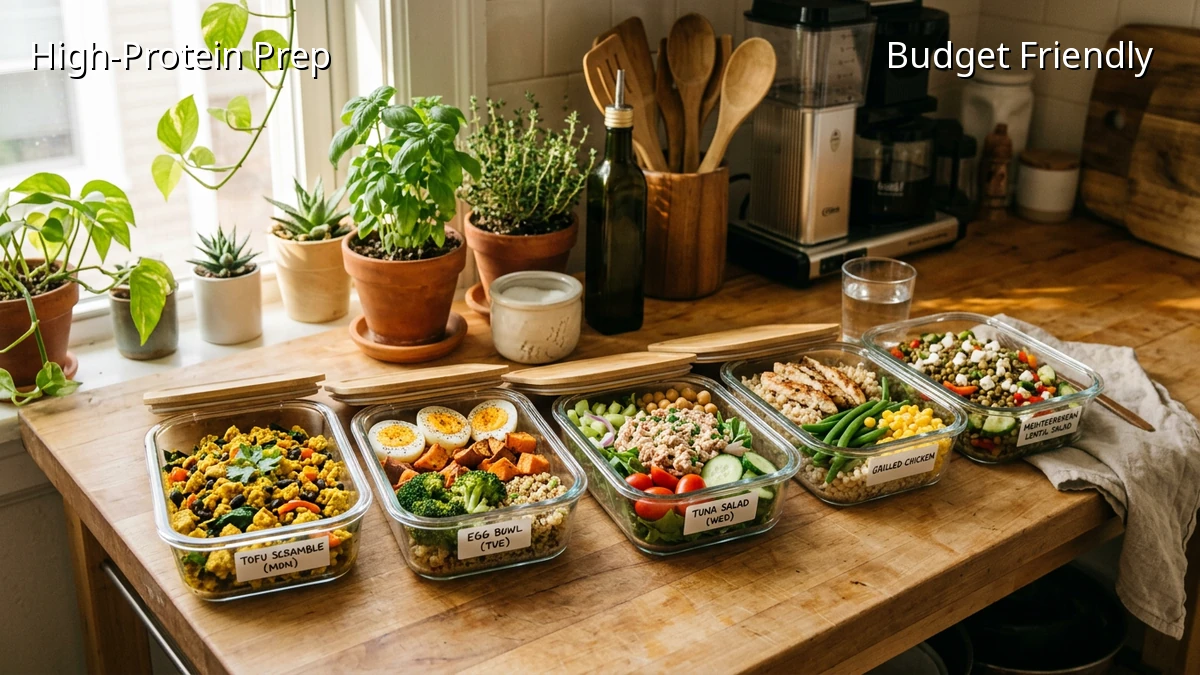
1. Budget-Friendly Tofu and Egg Scramble
This is a wonderful warm breakfast or lunch option that reheats beautifully. Tofu adds volume and protein without adding extra cost.
- Ingredients: One block of firm tofu (drained and crumbled), six eggs, a splash of milk, a handful of spinach or any cheap frozen veggies, salt, pepper, and a pinch of turmeric for color.
- How to Prep: Heat a little oil in a large pan. Add the crumbled tofu and frozen veggies, sautéing until the moisture evaporates. Whisk the eggs with milk, salt, and pepper, then pour into the pan. Stir gently over medium heat until the eggs are just set.
- Portion Control: Divide this scramble into three or four containers. It pairs perfectly with a slice of whole-wheat toast or a scoop of leftover rice.
2. Savory Tuna Salad Bowls
No reheating required for this one, making it the ultimate grab-and-go lunch for busy days on campus.
- Ingredients: Three cans of drained tuna, one can of rinsed black beans, diced cucumber or celery for crunch, a spoonful of mayonnaise or Greek yogurt, and a squeeze of lemon juice.
- How to Prep: In a large bowl, mix all the ingredients together. Season with salt, pepper, and dried herbs if you have them.
- Portion Control: Divide into containers alongside some pre-washed salad greens or whole-grain crackers. Keep the crackers separate until you are ready to eat to avoid sogginess.
Storage and Reheating Tips for Busy Weeks
Once you have done the cooking, proper fridge storage is key to keeping your meals fresh and appetizing.
- Use Airtight Containers: Glass or high-quality BPA-free plastic containers keep air out and prevent your food from drying out.
- The 4-Day Rule: Keep your prepped meals in the fridge for up to four days. If you made a massive batch, freeze half of it right away to enjoy later in the month.
- Reheating Tips: When reheating egg or tofu dishes, microwave them at medium power and add a tiny splash of water to the container to keep them moist. Avoid reheating tuna salad; enjoy it cold or at room temperature.
Finding Your Own Rhythm
Meal planning and batch cooking do not have to be perfect to be effective. If you only manage to prep three lunches for the week, that is still three days where you do not have to worry about what to eat or how much it will cost.
Be gentle with yourself as you navigate your busy schedule. Every small step you take toward nourishing your body with simple, healthy meals is a win. You do not need a perfect routine—just a realistic one that works for you.